When a clogged drain becomes an emergency
Most clogs are an annoyance, not an emergency. But a clogged drain becomes an emergency when water starts coming up where it should not, or when every drain in the house slows down at once. This guide helps you tell the difference, try the safe fixes first and know when to stop and call.
- Licensed local technicians
- No obligation
- All of Muncie
Simple clog or main line backup
The key question is whether the problem is in one fixture or the whole house.
Simple clog or bigger problem
| What you see | What it usually means | How urgent |
|---|---|---|
| One sink or tub drains slowly | A local clog in that fixture's trap or branch | Can wait a day or two |
| One drain fully blocked | A local clog that has closed the pipe | Call soon |
| Gurgling from a toilet when a sink drains | A partial blockage further down the line | Call today |
| Several drains slow at once | The main sewer line is blocking | Call today |
| Water coming up a floor drain or tub | A main line backup | Call right away |
| Sewage smell plus slow drains | A main line problem | Call right away |
What to try first on a simple clog
For a single slow sink, tub or shower, these steps clear many clogs safely.
- Clean the stopper and strainer. Hair and soap collect right at the top. Pull the stopper and clean it.
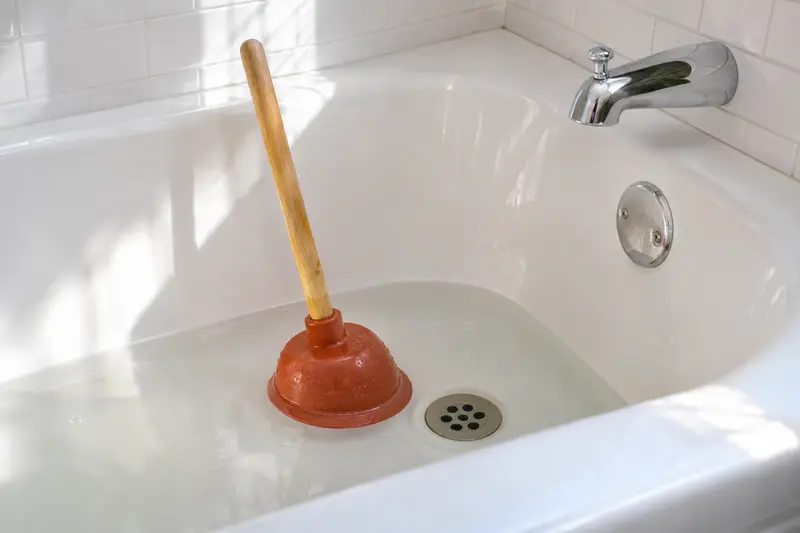
- Use a plunger. Cover the overflow hole with a wet cloth, add a little water to cover the cup and plunge firmly a dozen times.
- Try a hand auger. A small drain snake reaches clogs just past the trap.
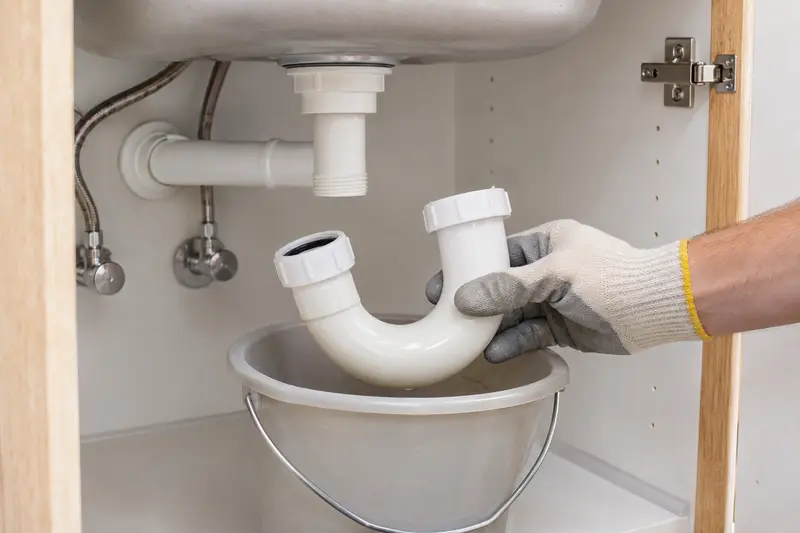
- Clean the trap. Under a sink, the curved P trap can be unscrewed with a bucket below to catch the water.
Stop here if it does not clear
If a few minutes of plunging and a hand auger do not work, or water appears somewhere else, stop. The clog is further down and needs a technician.
When a clogged drain becomes an emergency, the signs
- Water rising in another fixture. Running the washer fills the tub, or flushing a toilet bubbles a nearby drain.
- The basement floor drain fills. The lowest drain in the house is the first place a main line backup shows.
- Every drain is slow. Sinks, tubs and toilets all drain slowly at the same time.
- Sewage smell. A sewer smell in the basement or around drains along with slow drainage.
- Toilets will not flush. More than one toilet backs up or will not empty.
Any of these means the clog is in the main line. Stop using water in the house and call. The sewer line backup page explains what happens next.
What not to do with a stubborn clog
Do not pour chemicals into standing water. They rarely clear the clog, can damage older pipes and splash back on whoever opens the line.
Do not keep flushing a blocked toilet. Each flush adds water with nowhere to go.
Do not run the washer or dishwasher. They send a lot of water at once into a line that cannot take it.
Do not force a large auger into an old pipe. Rented power augers can damage clay or cast iron lines and get stuck.
Holiday clogs and busy weeks
In Muncie, holiday cooking and a full house are common triggers for drain clogs. Grease from roasting pans, extra dishes and more guests flushing all arrive at once. A kitchen drain that was a little slow before the holiday can block completely on the day.
A few habits help. Pour cooled grease into a can rather than the sink. Scrape plates into the trash. Run the dishwasher with full loads rather than many small ones. If any drain has been slow for a while, deal with it the week before guests arrive.
For the full picture on each drain in the house, read drain cleaning, and for what to do in the first minutes of any emergency, the what to do now guide.
Keeping drains clear year round
Strainers in kitchen and bathroom sinks, hair catchers in showers and only toilet paper in the toilet prevent most clogs. Run hot water for a minute after washing dishes. Pour a bucket of water into seldom used floor drains every few months so their traps stay full. And if the same drain clogs again and again, have the line looked at rather than clearing it over and over.
Which drains share a line
Drains in a house join together on their way to the main line. A bathroom sink, tub and toilet usually share a branch. The kitchen sink and dishwasher share another. The washing machine often joins near the basement floor drain. When a clog sits where branches meet, water from one fixture comes up in another.
That is the clue to look for. If running the washer fills the floor drain, or flushing a toilet makes the tub gurgle, the clog is past the point where those drains join. That is when a clogged drain becomes an emergency, because the next step is often a backup.
Clogs in older pipes
Older homes often have cast iron or galvanized drain pipe. Over the years the inside rusts and turns rough, and grease and paper catch on the scale. A drain like that clogs more often and clears less completely. Plunging may open a path, but the buildup stays.
Tree roots are another reason older lines clog. Roots find their way into the joints of clay sewer pipe and grow into a mat that catches paper and grease. A drain that clogs every spring or every fall, when roots are growing, often has roots in the main line. Clearing the roots helps for a while, but they come back, so a camera inspection is the way to see how bad it is and whether a section of pipe needs repair.
Grease is the other big one in older kitchens. Decades of washing up can leave a thick layer on the inside of an old kitchen line, and each clearing only opens a narrow path through it. Hydro jetting removes that layer rather than punching a hole in it.
Rented power augers can make things worse in old pipe, cracking clay joints or getting caught in corroded cast iron. If an older drain clogs again and again, a camera inspection shows the condition of the pipe and whether cleaning or a repair makes more sense.
What a technician does for a stubborn clog
The technician first works out where the clog is by checking which fixtures are affected. A clog under one fixture is cleared at the trap or with a drain cable through the fixture. A deeper clog is reached through a cleanout, with a larger cable sized for the line.
For heavy grease or repeat clogs, hydro jetting scours the inside of the pipe. A camera inspection confirms the line is clear and shows any damage. Before anything beyond clearing the clog, you hear what was found and what is recommended. If you are unsure whether your situation is the point where a clogged drain becomes an emergency, call and describe it.
Drain smells and what they mean
A smell is often the first sign of trouble. A sour smell from a kitchen drain usually means food and grease are sitting in the trap or the line. A sewer smell from a floor drain that is rarely used often means its trap has dried out, and pouring a bucket of water into it fixes the problem. A sewer smell from several drains at once, especially with slow drainage, points to the main line.
If the smell comes with water rising somewhere or every drain slowing down, that is when a clogged drain becomes an emergency. Stop using water in the house and call.
Clogged drain questions
Is a slow drain an emergency?
Usually not. A single slow drain can wait a day or two. It becomes urgent when several drains are slow at once or water comes up somewhere else.
Why does water come up in my tub when I run the washer?
The drains share a line, and a clog further down forces water back up at the lowest point. That often means the main line is blocked.
Should I keep plunging a drain that will not clear?
If a few minutes of plunging does not help, stop. Forcing a deeper clog can push water out of another drain or damage old pipes.
Can I use a chemical cleaner on a fully blocked drain?
It is better not to. The chemicals sit in the standing water, rarely clear the clog and make the job unsafe for whoever opens the line.